
Goblet Squat: Muscles Worked and More

published by: Debbie Luna

reviewed by: Daniel Dominick TE, PTRP
Last Updated:
January 18, 2024
Goblet squats are a classic form of weighted squat involving a dumbbell or kettlebell held up to chest-height in both hands.
The goblet squat is most often performed to target the quadriceps femoris while also working the hamstrings and glutes in a manner similar to other forms of loaded bilateral squat.
Contents
Show
What is a Goblet Squat?
Tallying up its various characteristics, we can determine that the goblet squat is a closed chain compound movement involving large-range dynamic movement of the knees and hips.
Essentially, goblet squats are nearly mechanically identical to barbell back squats or dumbbell front squats, only with a slightly more forward upper trunk angle and the weight being suspended at the front of the torso.
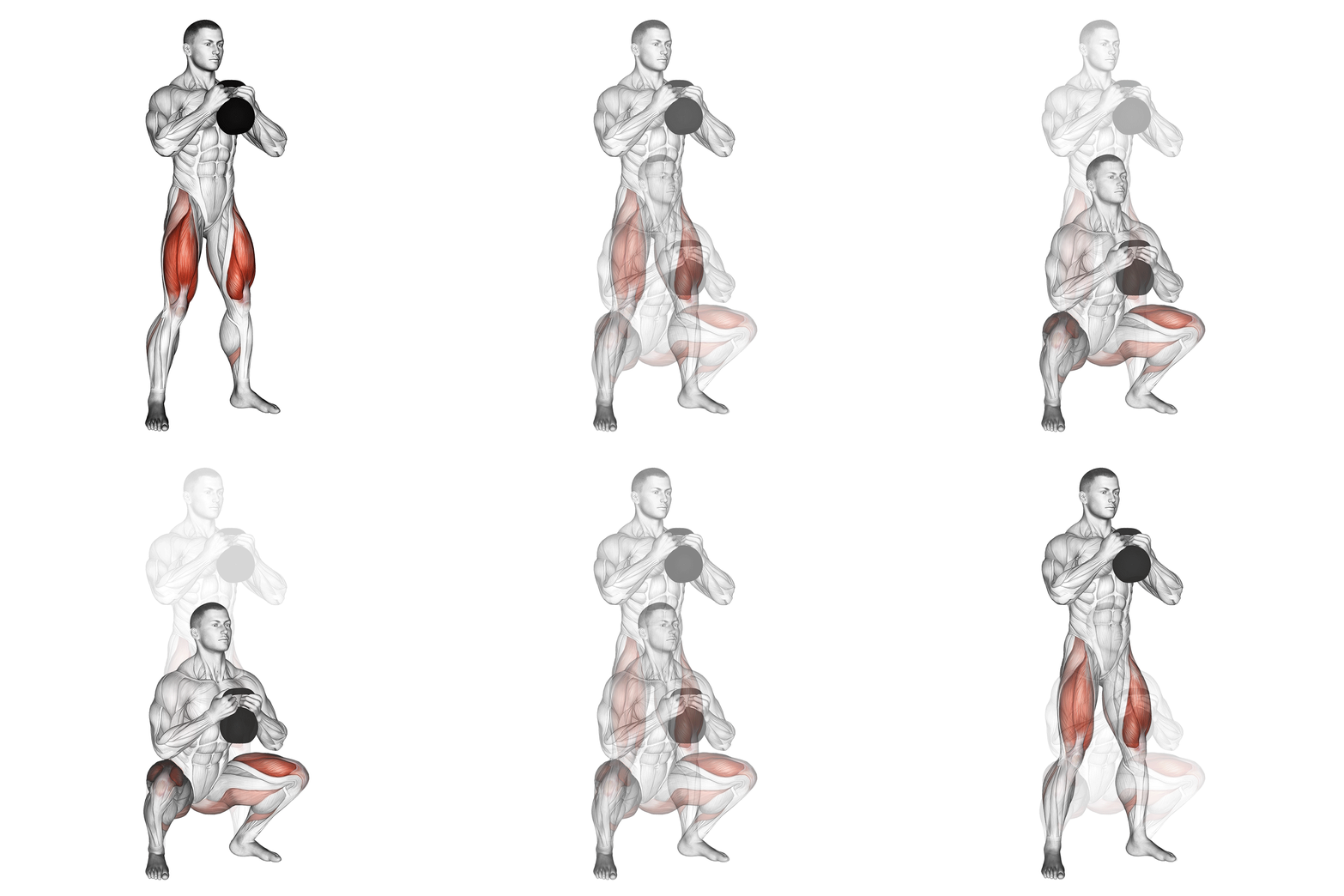
In actual training programming, the goblet squat is most often used as either a primary compound exercise (in lighter sessions) or as a secondary supportive movement to squat variations that allow for greater loading.
The main advantage to goblet squats is their low barrier of entry and far more natural movement pattern, so to speak.
Lifters who find the back squat or leg press to be uncomfortable can try the better load distribution of goblet squats for a more suitable lower body workout. However, these advantages come at the limitation of maximal loading capacity.
After a certain level of strength has been established, it is unlikely that lifters will be reasonably able to hold their working weight up to their chest, causing the development of their legs to stall without heavier leg exercises performed in concert.
How to Do a Goblet Squat
To perform a repetition of the goblet squat, the lifter will first begin by hoisting a dumbbell up to chest height, gripping it between both hands with the palms facing inwards. The scapula should be depressed with the elbows pointing downwards, kept close to the dumbbell as the hands suspend it.
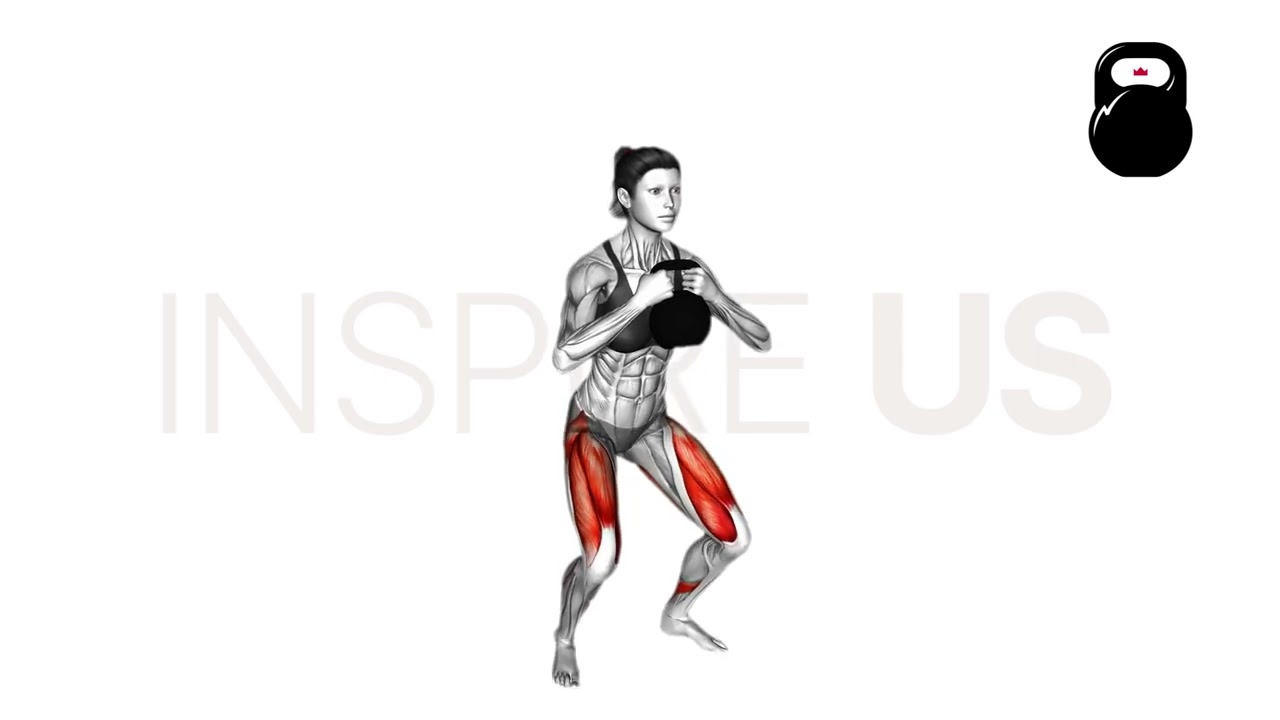
With the dumbbell now secured, the lifter sets their stance by planting their feet approximately shoulder-width apart, toes pointing forwards and lower back either neutral or slightly arched.
The chest must be pushed out with the shoulders rotated into a neutral position, core braced to maintain trunk stability.
Now positioned appropriately, the lifter pushes their hips back and bends their knees into a full squat - all the while keeping the trunk upright and the dumbbell at chest-height.
Once the thighs are parallel to the floor, proper depth has been reached.
The lifter may then continue to complete the repetition by driving through their heels and extending their hips forwards, rising back into an upright position.
Sets and Reps Recommendation:
Because the goblet squat is not meant to be a particularly heavy variant of squat, aiming for a higher range of volume per set will be more conducive to muscular development.
3-5 sets of 8-16 repetitions at a moderate load will be ideal for most novice and intermediate level lifters.
What Muscles Do Goblet Squats Work?
Goblet squats are a compound movement, meaning that multiple muscles are targeted with each repetition.
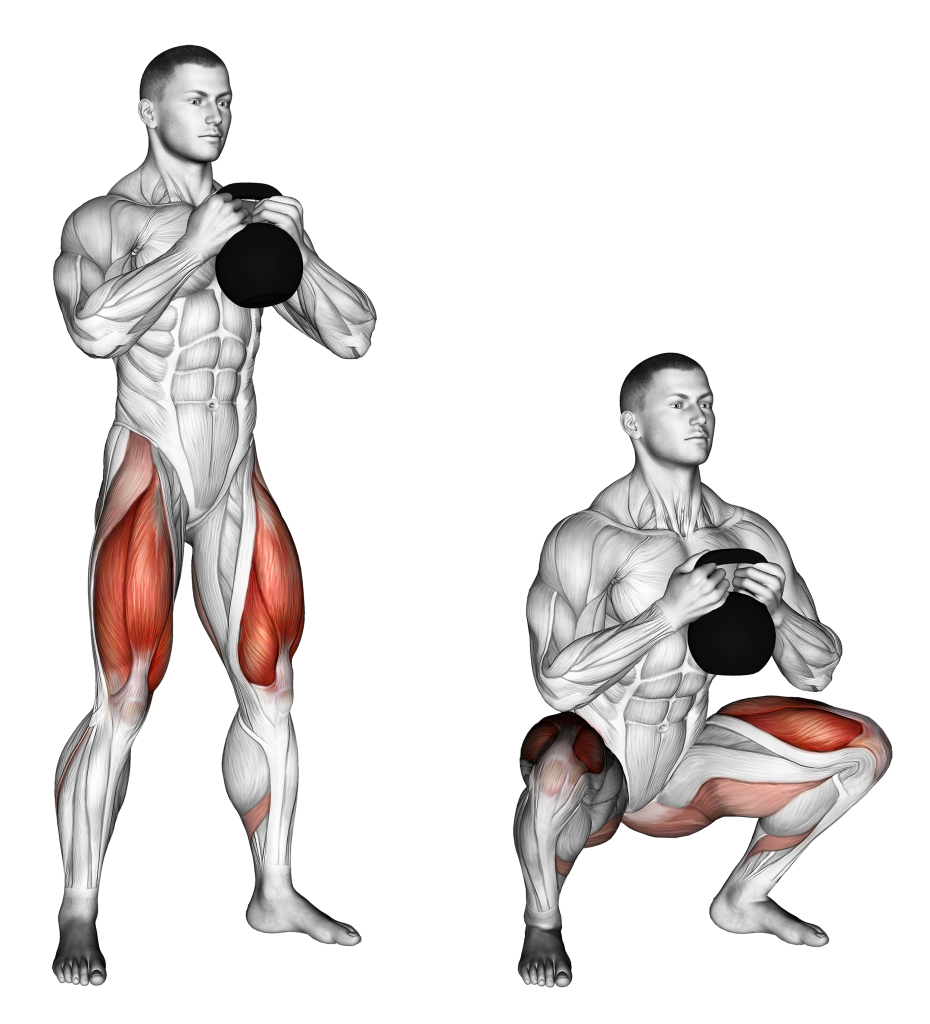
These muscles are separated according to the type of contraction they exhibit, with intense lengthening and shortening marking a muscle as a “mobilizer” and in-place static contraction a “stabilizer” muscle.
Generally, mobilizer muscles are taxed to a greater degree and are far more important to completing a movement - meaning they also receive significantly greater benefit in comparison to the stabilizer muscles, whom contract isometrically.
Mobilizer Muscles
Due to the anterior position of the load used in goblet squats, the quadriceps femoris act as the primary mobilizer muscle of the exercise.
True to their biomechanical function, the quadriceps work to extend the knee during the second phase of each goblet squat repetition.
Alongside the quadriceps are the hamstring and gluteal muscle groups - both acting as secondary mobilizers as they initiate and sustain hip extension.
Stabilizer Muscles
The goblet squat tends to involve more stabilizer muscle groups than other squat variations, as the dumbbell is kept suspended at chest-height between the hands.
Apart from more traditional stabilizer muscles like the abdominals, obliques and erector spinae, goblet squats will also contract the pectoral and deltoid muscles in an isometric capacity.
Common Goblet Squat Mistakes to Avoid
Though the goblet squat is considered to be a novice-level exercise, even more experienced weightlifters are prone to making the following common mistakes. Correcting them will not only help prevent injury, but also lead to better muscular development.
Excessive Forward Trunk Lean
One of the most important aspects to monitor when performing a goblet squat is the angle of the trunk, especially when bending forwards at the waist or lower back.
An excessive forward lean to the upper body can cause the lifter to lose balance due to the position of the weight at the front of the chest. Furthermore, while not necessarily guaranteed, forward leaning of the trunk can also indicate flexion of the lower back and a subsequently greater risk of spinal injury.
Though goblet squats will not feature as vertical a trunk as front squats, they should nonetheless be performed with the upper body angled no more than 10-15 degrees away from being completely upright.
Poor Range of Motion
A common mistake in practically any exercise; failing to complete a full range of motion with the goblet squat can cause the posterior chain muscles to be underworked - and otherwise greatly increase strain on the knee joints, depending on maximum depth.
Each repetition must begin and end with the knees and hips fully extended, whereas the lifter should descend to a depth where the thighs are parallel to the floor at the least. A deeper squat is, of course, preferable in terms of gluteal muscle activation and reduced torsion on the knees.
Failing to complete a full range of motion may be a sign of poor hip or ankle mobility, or that the lifter’s stance is excessively narrow.
Dive-Bombing the Descent/Uncontrolled Tempo
In order to reduce the amount of force the knees are forced to absorb with each repetition, lifters should aim to descend in a slow and controlled manner, coming to a gradual stop at the bottom depth of the repetition.
Apart from reducing joint strain, performing the goblet squat in this manner also serves a double purpose as it creates a greater length of time under tension during eccentric contraction - of which is highly conducive to muscular hypertrophy.
Though it will vary between different training purposes, the majority of generalist weightlifters will want to stretch out their eccentric phase for as long as three seconds, if not longer.
Allowing the Knees to Bend Inwards
Also known as knee valgus, internal femur rotation or going “knock-kneed”, all variations of squat should be performed with the knees pointing either forwards or outwards.
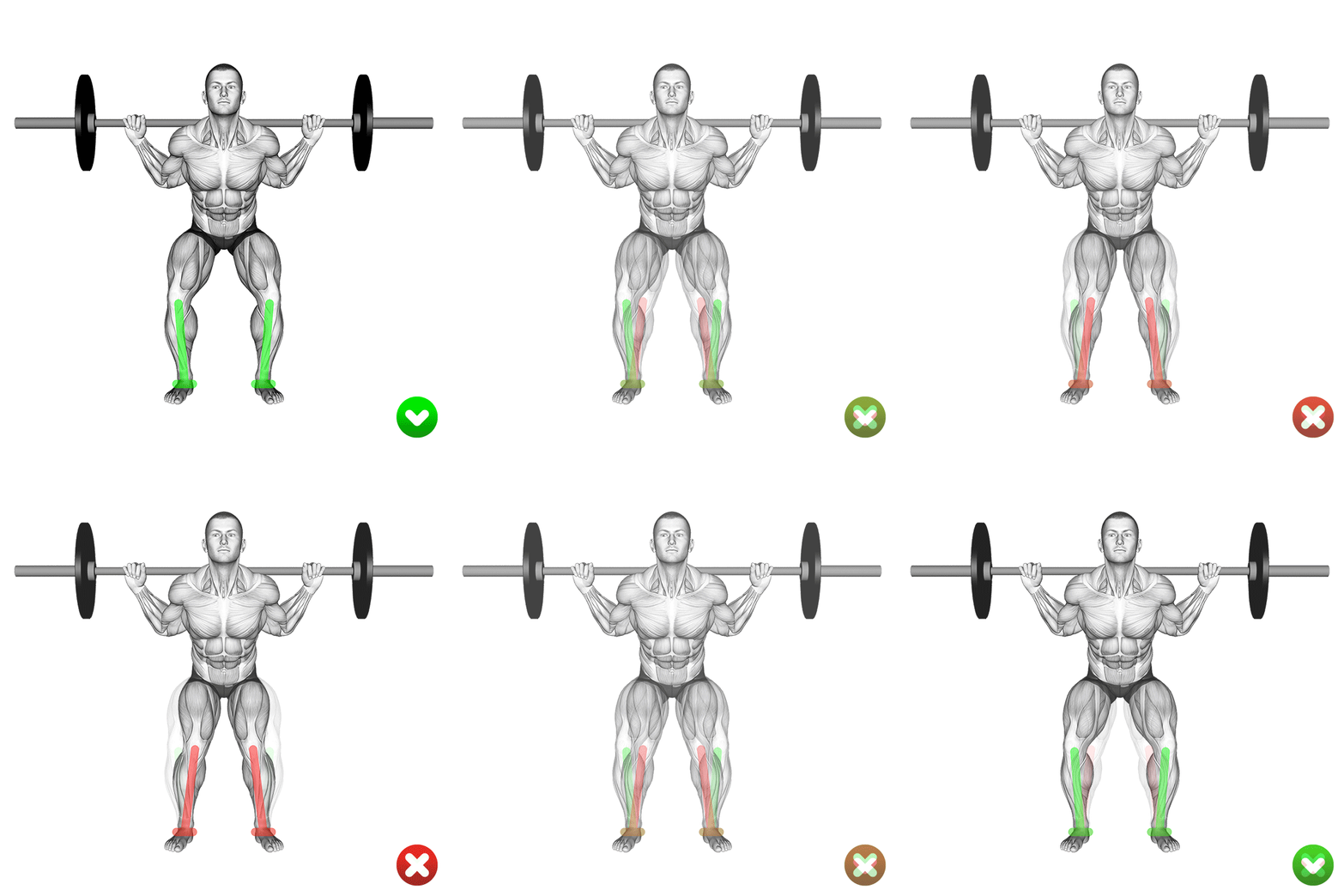
At no point should they begin to collapse towards one another, as this greatly increases strain within the joints and can lead to a loss of balance.
Consistently collapsing the knees inwards can be a sign of poor ankle or hip mobility, or that the lifter is attempting to lift more weight than they are able. Other causes may be poor footwear, an excessively wide stance or the toes pointing in a direction other than forwards.
Curving the Upper Back Forwards
Because a significant amount of weight is held at the front of the chest, a common mistake is curving the upper back forwards as the lifter struggles to keep the dumbbell elevated. For similar reasons, the shoulders may also rotate inwards or the scapula may protract.
In order to avoid injury of the shoulder joint, cervical spine or shoulder blades, the upper back should remain aligned with the rest of the back, scapula either neutral or partially retracted for greater stability.
Often, if internal shoulder rotation or forward back curvature is present in a goblet squat, it is because the lifter is holding the dumbbell too far from the chest. Adjusting their stance so that the elbows are nearly tucked against the ribs is an excellent cue for correcting such an issue.
Goblet Squat Variations and Alternatives
If the goblet squat isn’t quite what you need out of your training, try the following similar alternative exercises.
Dumbbell Front Squats
Dumbbell front squats are essentially the more upright cousin to goblet squats, featuring a nearly vertical trunk orientation and the dumbbells resting atop the shoulders, rather than suspended by the hands.
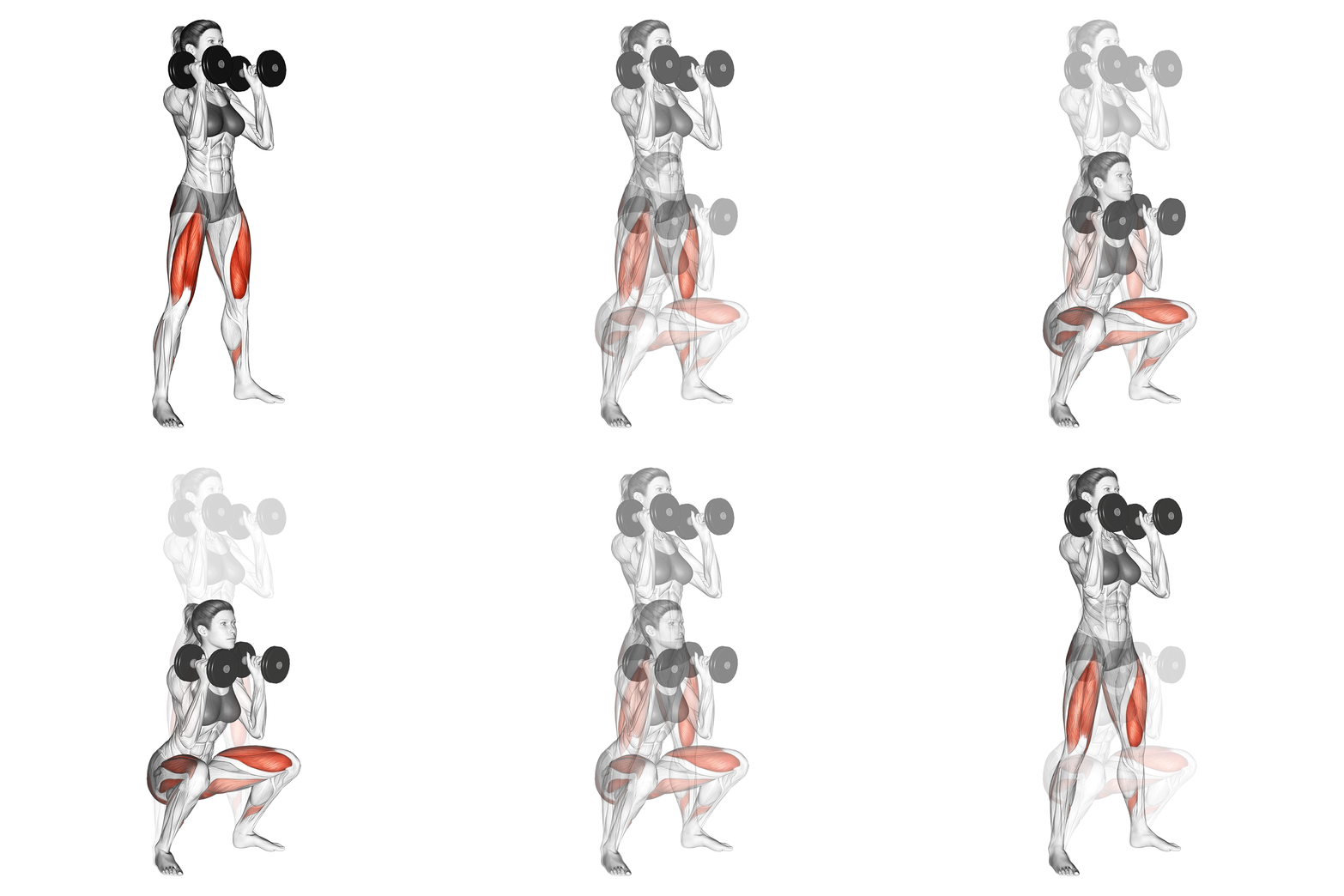
Apart from being even safer for the lower back, the front squat allows for somewhat greater quadriceps contraction and a higher loading capacity due to the position of the dumbbells.
Kettlebell Swings
In cases where the goblet squat is present in a training program for the purpose of building power and explosiveness, kettlebell swings act as a far more effective substitute.
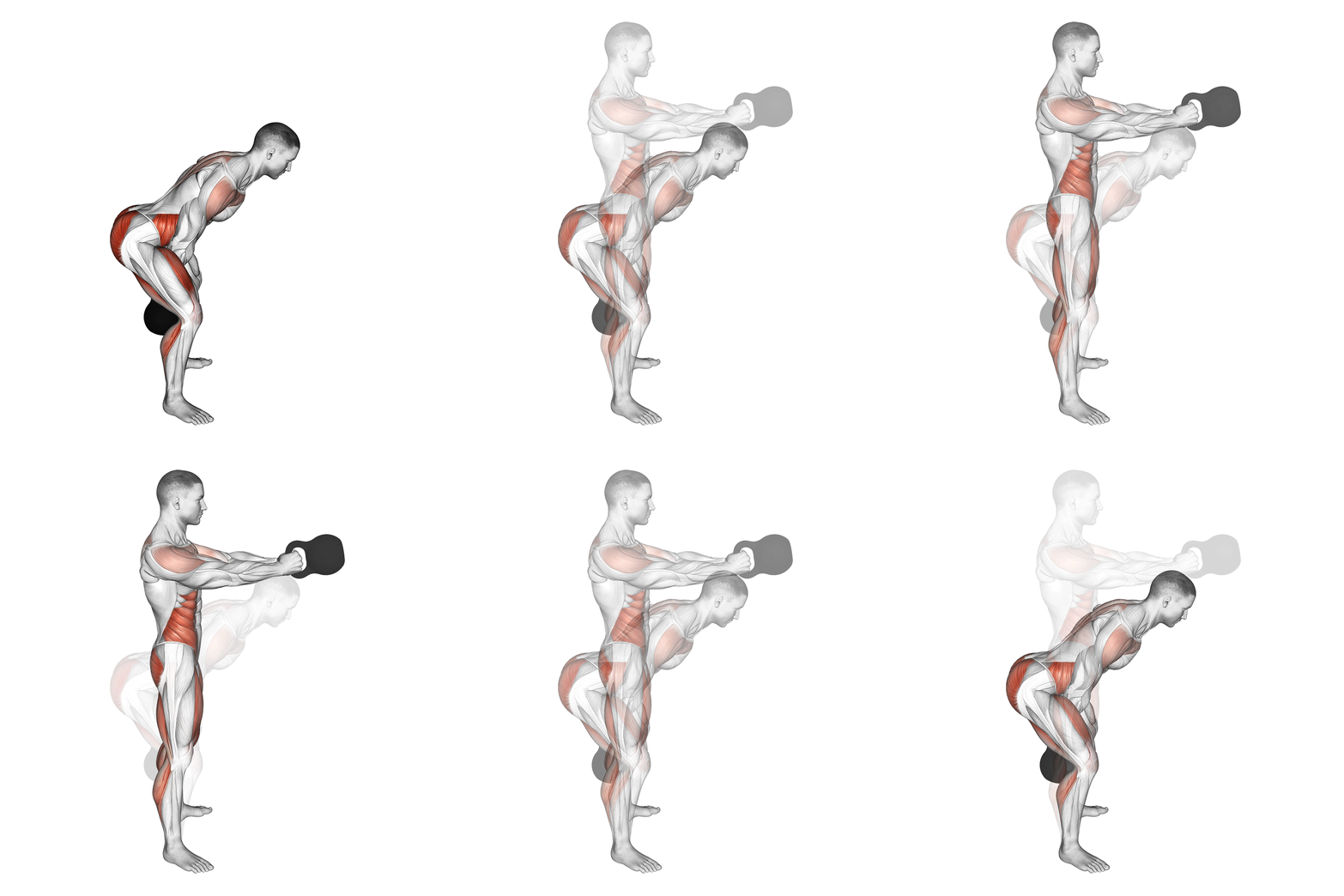
Unlike the slow and controlled goblet squat, kettlebell swings quite literally involve swinging a kettlebell from between the legs up to around chest height.
Although somewhat less quadriceps recruitment is used, the speed and force needed to perform swings is far more conducive to the development of power and explosiveness.
Goblet Box Squats
On the opposite end to kettlebell swings, goblet box squats instead force the lifter to pause between the concentric and eccentric phase of the movement.
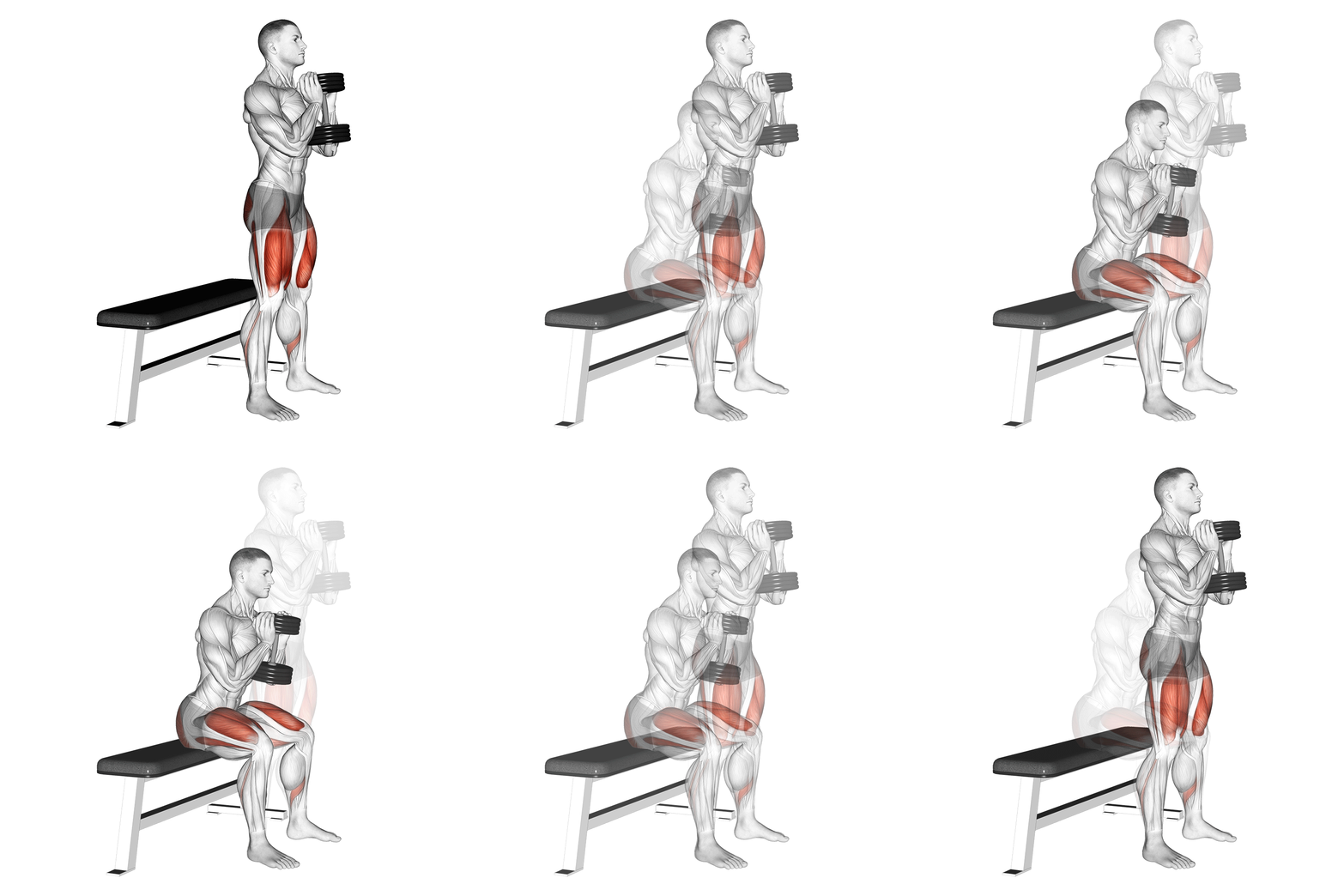
An otherwise ordinary goblet squat, the box squat variant places a platform beneath the lifter so that their momentum is arrested upon reaching desired depth - maximizing concentric contraction as the lifter is forced to drive gluteal contraction to rise back upwards.
Rather than building explosiveness and speed, goblet box squats are ideal for developing gross concentric strength and ensuring proper technique.
Frequently Asked Questions (FAQ)
What is the Difference Between a Goblet Squat and a Regular Squat?
Goblet squats are anterior loaded and feature a somewhat more upright angle to the upper body.
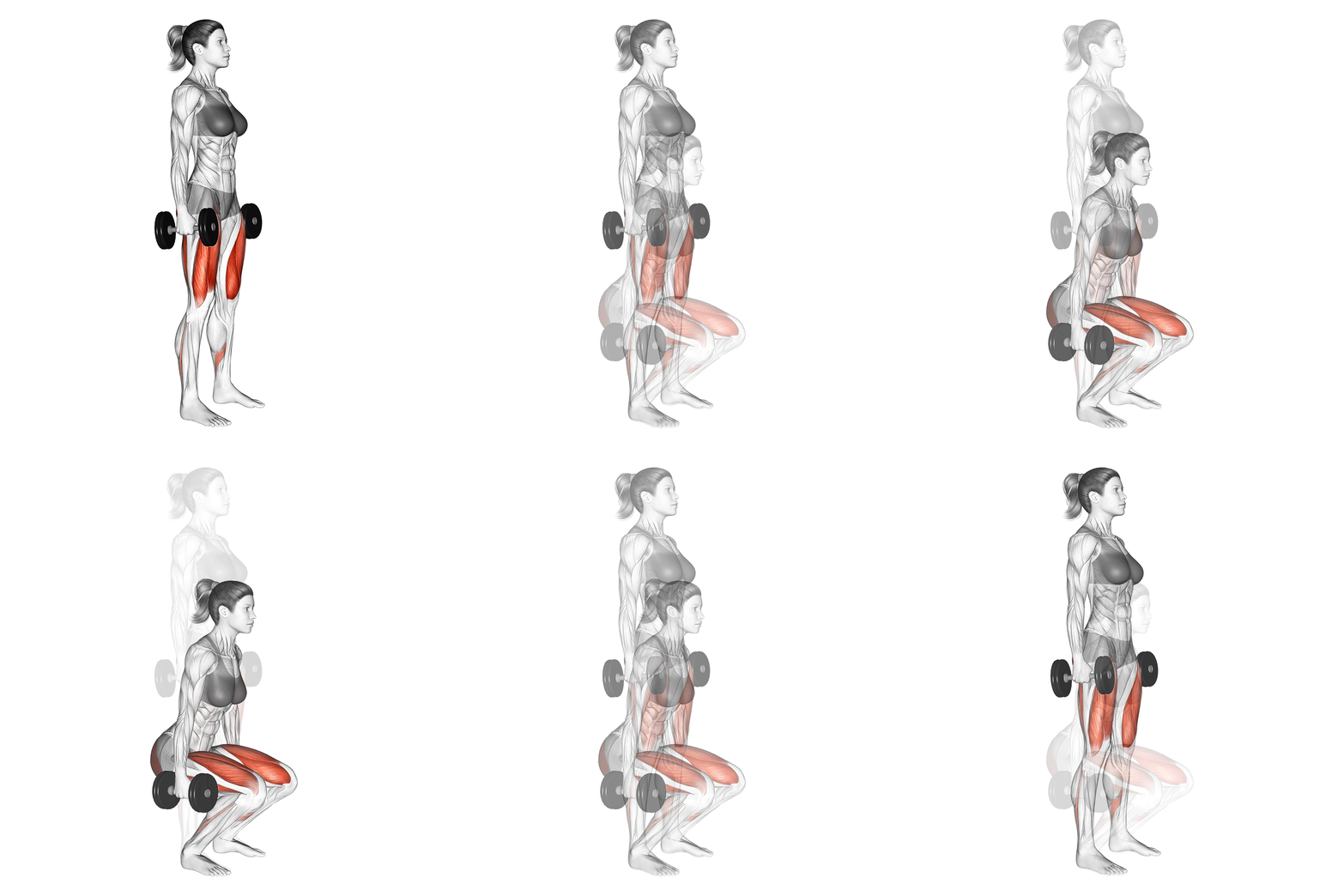
In comparison, regular back squats are posterior loaded and will occasionally be performed with a more forward trunk lean if the low bar variant is used.
Is the Goblet Squat Push or Pull?
All variations of squat are considered lower body push exercises, as they involve pushing through the heels through double extension of the knees and hips.
However, if programming according to muscle force output (such as with the famous Push/Pull/Legs routine), goblet squats should be included into a leg day workout instead.
Is it OK to Do Goblet Squats Every Day?
Performing any form of weighted resistance training on a daily basis can result in overtraining and injuries. The body requires time to recover between tough training sessions, and performing the same exercise on a daily basis prevents this recovery from occurring.
Instead, aim to perform goblet squats 2-3 times a week with at least 24 hours of rest between workout sessions targeting the same muscle groups.
References
1. Collins KS, Klawitter LA, Waldera RW, Mahoney SJ, Christensen BK. Differences in Muscle Activity and Kinetics Between the Goblet Squat and Landmine Squat in Men and Women. J Strength Cond Res. 2021 Oct 1;35(10):2661-2668. doi: 10.1519/JSC.0000000000004094. PMID: 34341315.
2. Lynn SK, Noffal GJ. Lower extremity biomechanics during a regular and counterbalanced squat. J Strength Cond Res 26: 2417–2425, 2012.
3. Slater, Lindsay V.; Hart, Joseph M.. Muscle Activation Patterns During Different Squat Techniques. Journal of Strength and Conditioning Research 31(3):p 667-676, March 2017. | DOI: 10.1519/JSC.0000000000001323
Debbie (Deb) started powerlifting and Olympic lifting in High School as part of her track team's programming; She continues to train in order to remain athletic. Inspire US allows Deb to share information related to training, lifting, biomechanics, and more.
Inspire US serves as an informational hub for people looking to start their fitness journey.
The information on this website has not been evaluated by the Food & Drug Administration. The content is not intended to be a substitute for professional medical advice, diagnosis, or treatment. The information being shared is for educational purposes only. You must consult with a medical professional before acting on any content on this website.
Copyright © Inspire US 2025